When execution outpaces strategy, you do not just have a consistency problem. You have a return problem. Every misaligned message, every brief rebuilt from scratch, every campaign that fails to build on the last one is commercial potential your strategy was already capable of delivering, but consistently is not. Polaris closes that gap: upgrading your positioning immediately, then maintaining it across everything your team produces so the return compounds over time.
The problem is rarely lack of strategy. It is the absence of a system that keeps strategy working once execution begins.
Sales explains the company one way. Campaigns frame it another. Different stakeholders interpret the strategy differently depending on their brief, their department, and the deadline in front of them. AI tools accelerate production, but they do not fix alignment: they amplify whatever is already there.
The result is not visible as a single failure. It accumulates. Messaging drifts between channels. Differentiation fades across campaigns. Buyers arrive less certain about what you do and why it matters.
It is not a perception problem. It is an operational one.
Individually, these look like execution problems. Together, they are a positioning problem, and they show up across the entire marketing & sales system.
Buyers cannot clearly distinguish you from alternatives. The top of the funnel fills with the wrong fit.
The conversation has to do the positioning work that marketing did not. Reps explain the business from scratch, every time.
No consistent foundation, so each new request starts from a slightly different place.
Each starts from a slightly different version of the message. Recognition never accrues.
When positioning stays consistent, buyers understand faster and teams move with more clarity. Campaigns build on each other. Marketing produces stronger return on the investment already going into it.
The commercial case for clear positioning has been built over decades by some of the most rigorous institutions in the discipline. Polaris did not invent these outcomes. It is the system that makes them achievable.
These results are not the product of exceptional creativity or unusually large budgets. They come from strategy being applied clearly and consistently across the business.
That is the problem Polaris is built to solve. The same evidence base that made consistent positioning a measurable competitive advantage now makes it operationally achievable.
Across 80 categories over 30 years: brand-building is the single most significant driver of long-term profit growth.
Price premium commanded by companies with clearly differentiated, consistently expressed brands.
Higher YoY revenue growth for tightly aligned organisations. Misaligned peers saw a 7% decline.
Of marketing budget wasted on poor briefs and rework. 60–70% of B2B content is never used by sales.
Polaris evaluates and strengthens positioning at the source: clarifying what the business stands for, who it is for, and why differentiation is credible.
Polaris keeps positioning operational as work moves through briefs, campaigns, content, and sales materials.
Most businesses are operating their positioning at a fraction of its commercial ceiling. Not because the strategy is wrong. Because it bleeds away in execution before it can compound.
Polaris closes that gap in two moves. It upgrades your positioning to its commercial ceiling first, then holds it there consistently across everything your team produces. Not incremental improvement. Your strategy finally working at full capacity.
Submit your website, deck, or existing materials. Polaris runs the initial calibration. Odyssey Machine walks you through the findings.
Of where your positioning is already working. The parts of the system landing as intended.
Of where effectiveness is being lost. Gaps between strategy and execution, ranked by impact.
Of improvements that will have the most commercial impact first. Concrete, sequenced, grounded in your work.
Five stages from intake to delivery. Each one is where positioning either survives or breaks. Polaris keeps it intact through all of them.
A stakeholder from sales, product, or leadership submits a request. It contains an objective, a deadline, and assumptions. It does not contain strategic direction.
Polaris ingests the brief and runs an initial calibration: identifying what is missing, what is misaligned with positioning, and what needs to be resolved before execution begins.
Polaris returns a strategically upgraded brief. Vague objectives are sharpened. Messaging is aligned to positioning. Audience, tone, and commercial intent are clarified.
The team now has a brief that is not just actionable, but strategically sound: before a single word of execution is written.
Output is scored against the positioning system: clarity, consistency, differentiation, and commercial intent.
Scores below 90 are returned with specific guidance. The team revises. No subjective debate. The standard is the strategy.
Work goes to the stakeholder at 90-plus, accompanied by the Polaris score and the strategic rationale behind every key decision.
The stakeholder is not being asked to like it. They are being shown why it is correct. Approval moves faster because the argument is grounded in the strategy they already agreed to.
Execution launches from a strategically aligned brief, with a scored and validated output. The stakeholder's objective is served. The brand stays intact.
The work resonates because it was built on clear positioning from the start. Results feed back into the system. Each cycle compounds the last.
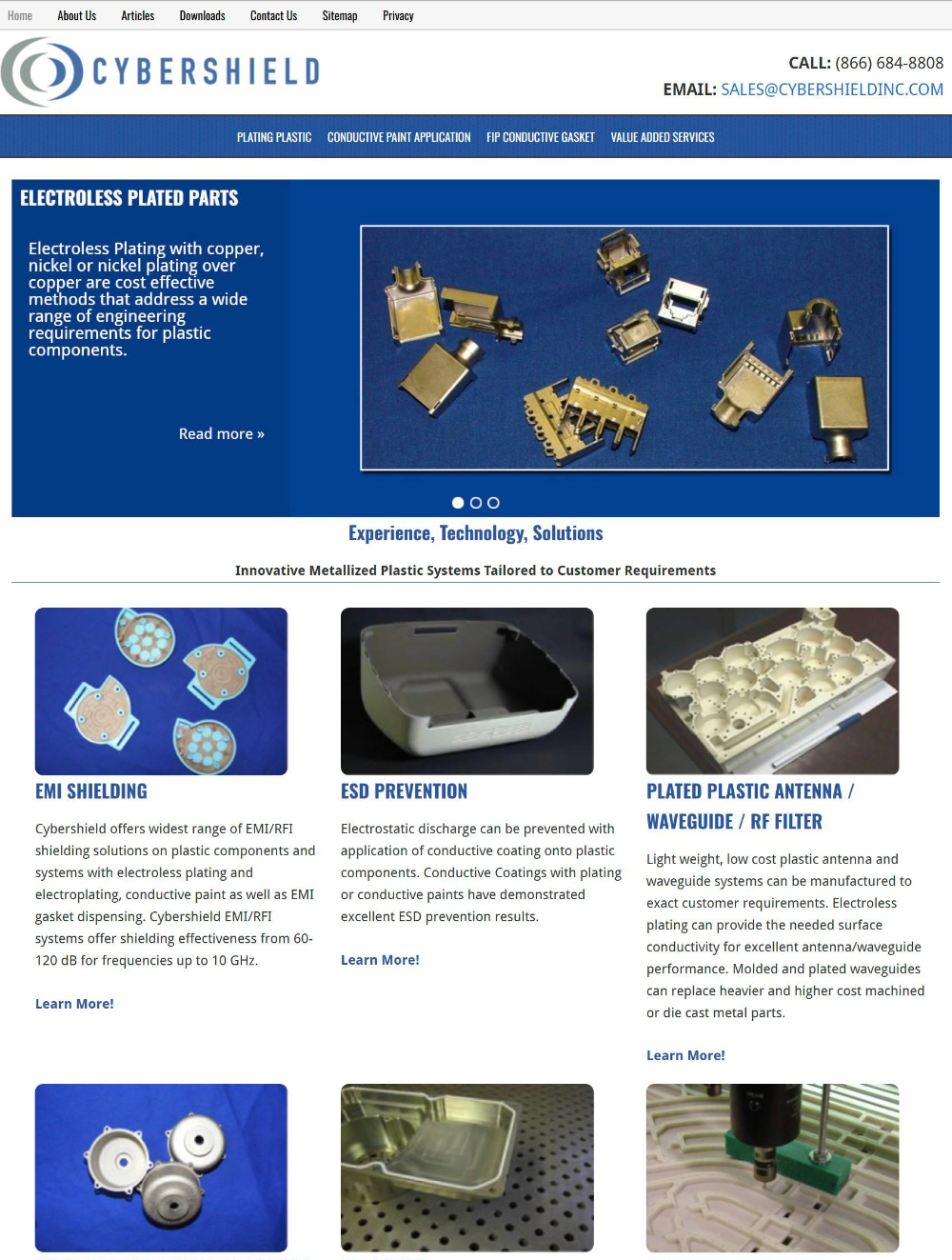
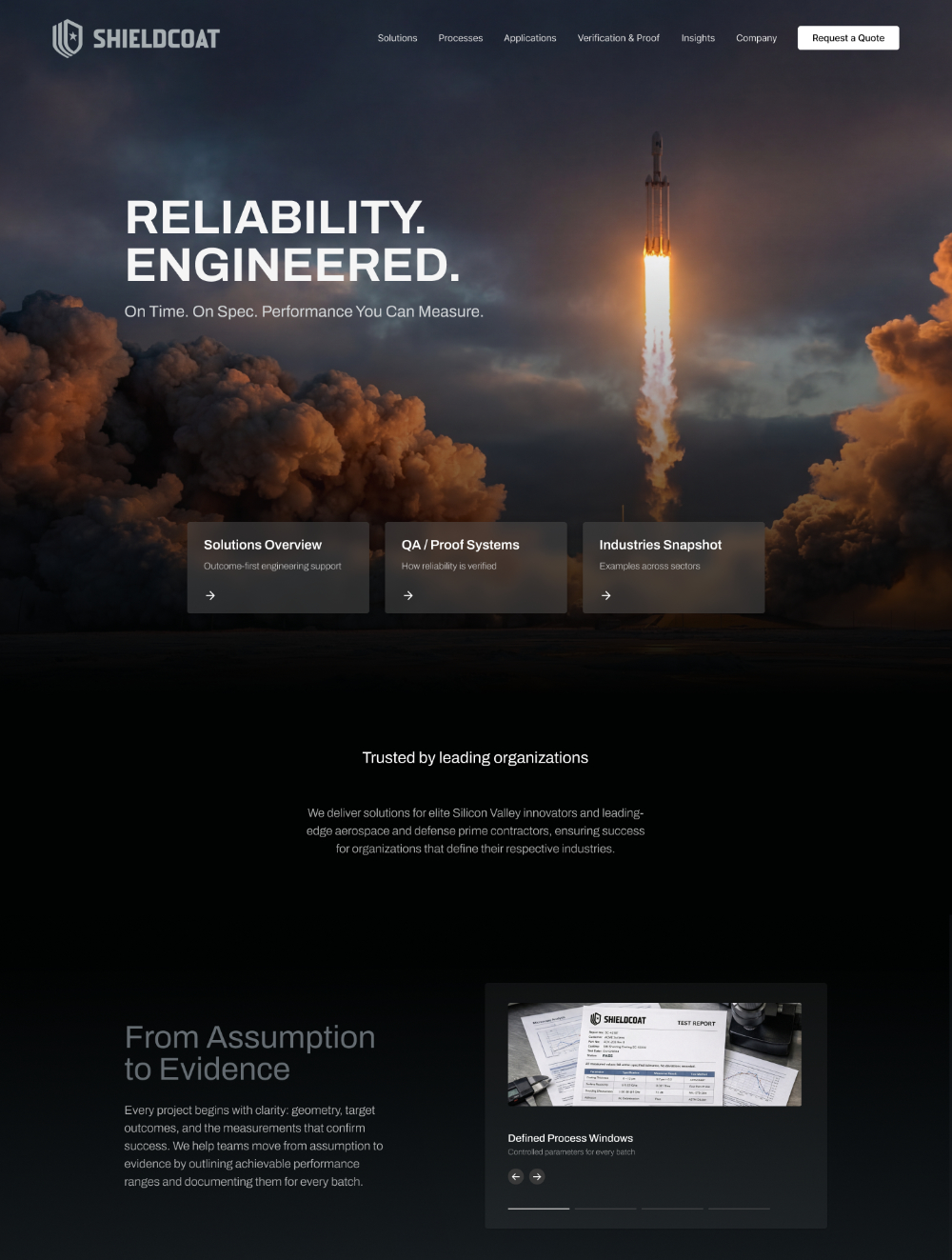
ShieldCoat had strong science, proven capability, and a track record. None of it was reaching buyers in the terms that mattered.
The website described processes and coating types. Buyers in critical applications were not evaluating coating chemistry. They were evaluating confidence: whether this supplier could be relied upon to specify correctly, document thoroughly, verify accurately, and deliver without error under pressure.
With that shift, Polaris built the messaging system that followed: a market promise, a narrative hierarchy, a website and sales structure that communicates value in the terms that drive buyer confidence.
ShieldCoat now has a positioning system that supports sales conversations directly, helps stakeholders explain the business consistently, and gives marketing a stronger foundation for future activity. Odyssey Machine took that positioning further: designing a new visual identity, logo, and brand language built entirely around the engineered reliability promise. The result is a business that does not just say it differently. It looks like it means it.
This is what strong positioning makes possible. Not just better copy. A complete commercial presence that is coherent from strategy through to every customer touchpoint. That is what Polaris enables your team to do.
Submit your website, pitch deck, or existing materials. Polaris runs the initial read. Odyssey Machine walks you through what it found and what to improve first.
A document explains a brand. An instrument runs one.